Village life
A Day in Barbizon
How to spend a day in a village where the forest, the paintings and the tables are all within walking distance of each other.
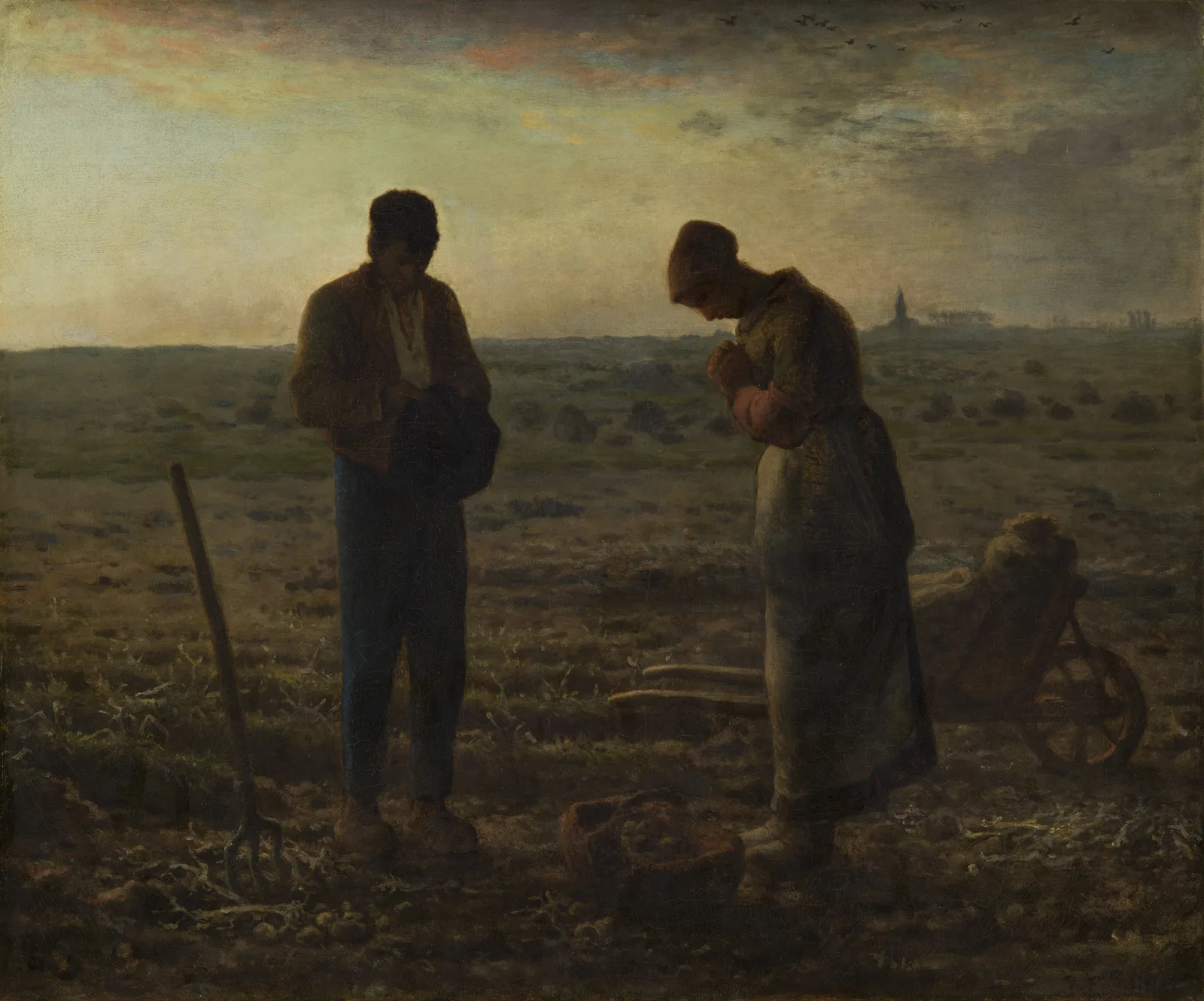
Barbizon is small enough to understand in a day and rich enough to reward several. Everything is on foot: the Grande Rue runs through the village, and the forest begins where it ends. What follows is one way to move through it. Not the only way, but a sequence that makes sense of the layers.
Morning: the village before it fills
Arrive before ten if you can. Before the day visitors come, the Grande Rue belongs to the people who slept here: the baker's round, the gallery owners lifting their shutters, the smell of coffee from Le Royal.
Start at La Galerie des Pains at 70 Grande Rue. Guillaume Potherat, Compagnon du Devoir, has been baking here since 2009: slow-fermented sourdough, viennoiseries, pastries. Buy something for the walk. The bread alone justifies the detour.
Then walk up to the Auberge Ganne at 92 Grande Rue, home of the Musée des Peintres de Barbizon. Go in. The painted furniture and walls of the old inn, where dozens of painters lodged from the 1820s to the 1860s, are the most complete record of how the Barbizon School actually lived. Allow an hour.
Late morning: houses and studios
Then walk back down the Grande Rue, slowly, towards the forest. The street is the stage: every house has a history, the plaques are worth reading, and the gaps between them worth imagining.
At no. 40, Besharat Gallery & Suites occupies the former Hôtel des Charmettes, on the plot where the painters Karl Bodmer and later Albert Landerer lived. The contemporary art collection and sculpture gardens are open to visitors.
At nos. 27-29, Maison de Millet is the essential stop: the house and studio where he lived from 1849 until his death, his palette, his tools, his personal objects, which make the poverty and the ambition legible at once. Check opening times before you go.
Next door, at no. 26, La Juxtaposition offers a pause before the forest: a tea room with some twenty teas and homemade pastries.
Lunch
The choice depends on mood and pace.
For a proper table: Le Relais de Barbizon for fish, or La Bohème for classic bistro cooking on a terrace next to Millet's studio. Book ahead at weekends.
For something quicker: O Bout, at the forest end of the Grande Rue, for local produce and a glass of wine. Or Maison Morin at no. 57: traiteur, patisserie and fine grocery, a picnic assembled in five minutes.
If the weather is good and the morning has given you an appetite for trees, stop at Morin and take it all into the forest.
Afternoon: the forest
The Fontainebleau forest begins at the end of the Grande Rue. From the Bas-Bréau car park, the Allée des Vaches leads straight in under the trees: a wide, sandy path that opens into the forest within minutes.
For orientation: the Parcours des Mosaïques lines the Grande Rue with mosaic reproductions of Barbizon School paintings. It takes about twenty minutes and makes the forest walk that follows make more sense.
To go further: the Sentier des Peintres starts from Place Marc Jacquet and follows the paths the painters took to reach their motifs: sandstone boulders, open clearings, the light that kept Rousseau in Barbizon. The loop is about six kilometres, two hours on foot.
Late afternoon: the galleries
The galleries on the Grande Rue stay open until early evening. Besharat Gallery for international contemporary art and the sculpture garden. Galerie L'Angélus, founded in 2011, for original Barbizon School works. Galerie Roz in Winter at no. 61 for a new exhibition each month. Galaxie des Arts at no. 83 for painting and sculpture since 1988. Muse Galerie at no. 82 for the work of Christoff Debusschere, official painter to the French Navy.
Entry is free. In a village this size, walking into them is part of how the place works.
Evening
L'Ermitage Saint Antoine, reopened in January 2026 under chef Cyrine Jarretie, for a proper dinner, the kind that concludes a day rather than interrupting it. Le Gaulois for meat, a list of more than 250 wines and a dining room where conversation runs late. L'Angelo for a pizza on the terrace if the day has been long and the appetite uncomplicated.
The village goes quiet early. In winter it is dark before six; in summer it is still light at ten. Either way, the day here has a shape most days elsewhere do not: a beginning at the bakery, a middle among the trees, an end around a table. That shape is not accidental. It is what the village was made for.