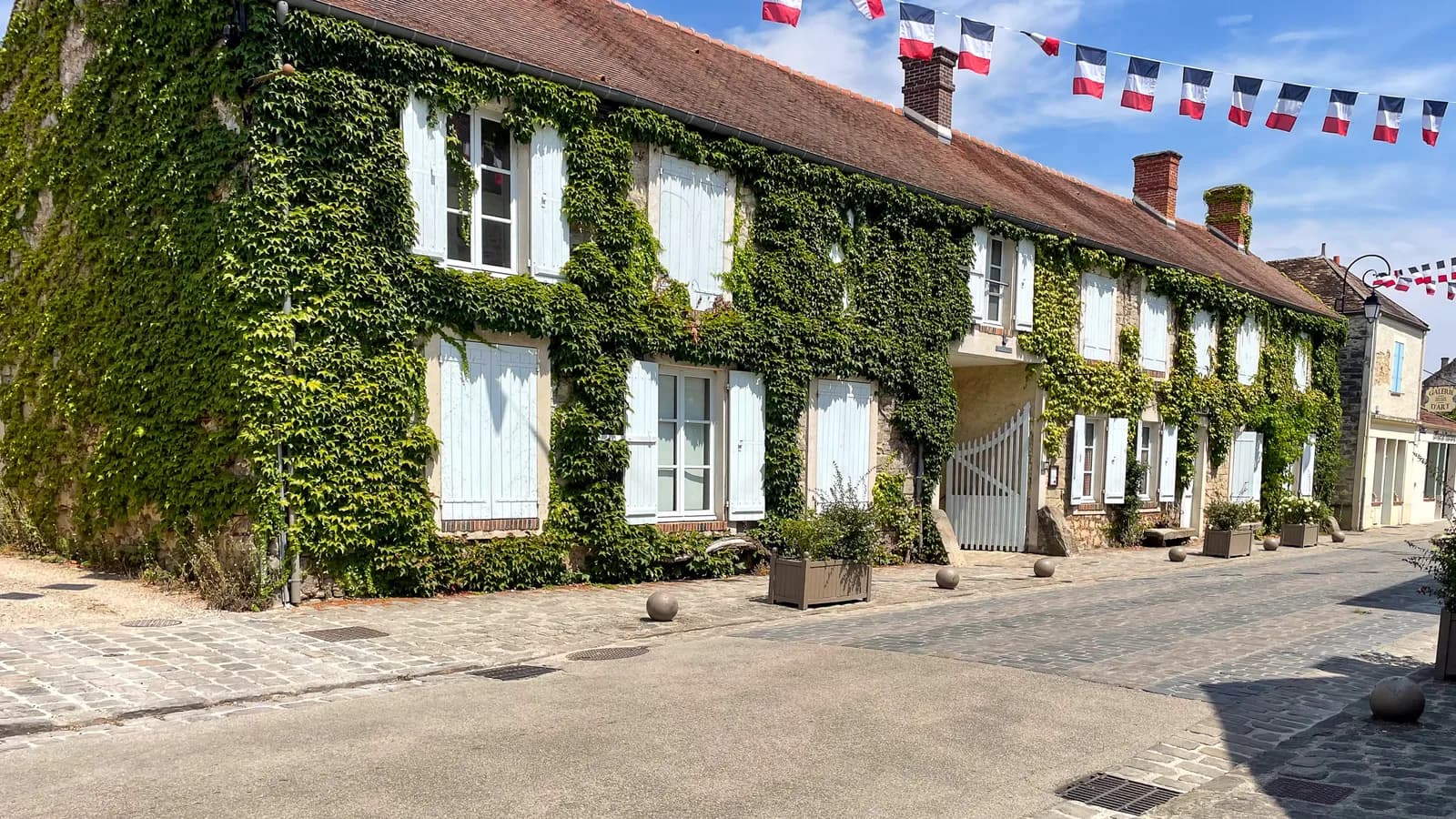
Auberge Ganne — Musée de l'École de Barbizon
92 Grande Rue, 77630 Barbizon
Le lieu
François Ganne, tailleur devenu épicier, logeait des peintres parce qu'ils cherchaient des chambres et qu'il cherchait des clients. En 1834, lui et sa femme achètent cette grande maison de la Grande Rue pour y offrir le gîte et le couvert. Ils ne pouvaient pas savoir que ce simple arrangement ferait de leur maison l'un des lieux fondateurs de la peinture française moderne.
Des années 1830 aux années 1860, près d'une soixantaine d'artistes, français et étrangers, se côtoient ou se succèdent à l'auberge. Ils font une chose qui n'a pas encore de nom institutionnel : quitter l'atelier, gagner la forêt, peindre ce qu'ils voient plutôt que ce que l'Académie dit de la nature. Ils mangent la cuisine des Ganne, dorment dans leurs chambres, et peignent sur tout ce qui s'y prête : les meubles, les panneaux des portes, jusqu'aux murs. La légende veut qu'ils aient ainsi réglé leur pension ; c'est surtout la trace d'une vie commune.
Après la guerre de 1870, Edmond Luniot, gendre des Ganne, ouvre un nouvel hôtel dans le village et y emporte une partie du décor peint ; d'autres souvenirs de l'auberge se dispersent. Le bâtiment change plusieurs fois de mains. Acquis par la commune en 1987, il est restauré ; les travaux révèlent, sous les papiers peints, les dessins et pochades laissés par les peintres. Le musée ouvre en 1995 et devient départemental en 2004. L'auberge devenue académie par accident est aujourd'hui le musée qui raconte ce qui s'est passé ici, et pourquoi cela a compté pour tout ce qui a suivi, l'impressionnisme compris.
Musée de l'École de Barbizon
Municipal museum since 1993. Original painted walls, furniture, and objects from the inn period. Permanent collection covering the Barbizon School 1830–1870. The most complete record of the movement that produced it.