Village life
The Inn That Became an Academy by Accident
On the Auberge Ganne, where a grocer's practical sense created a school without meaning to.
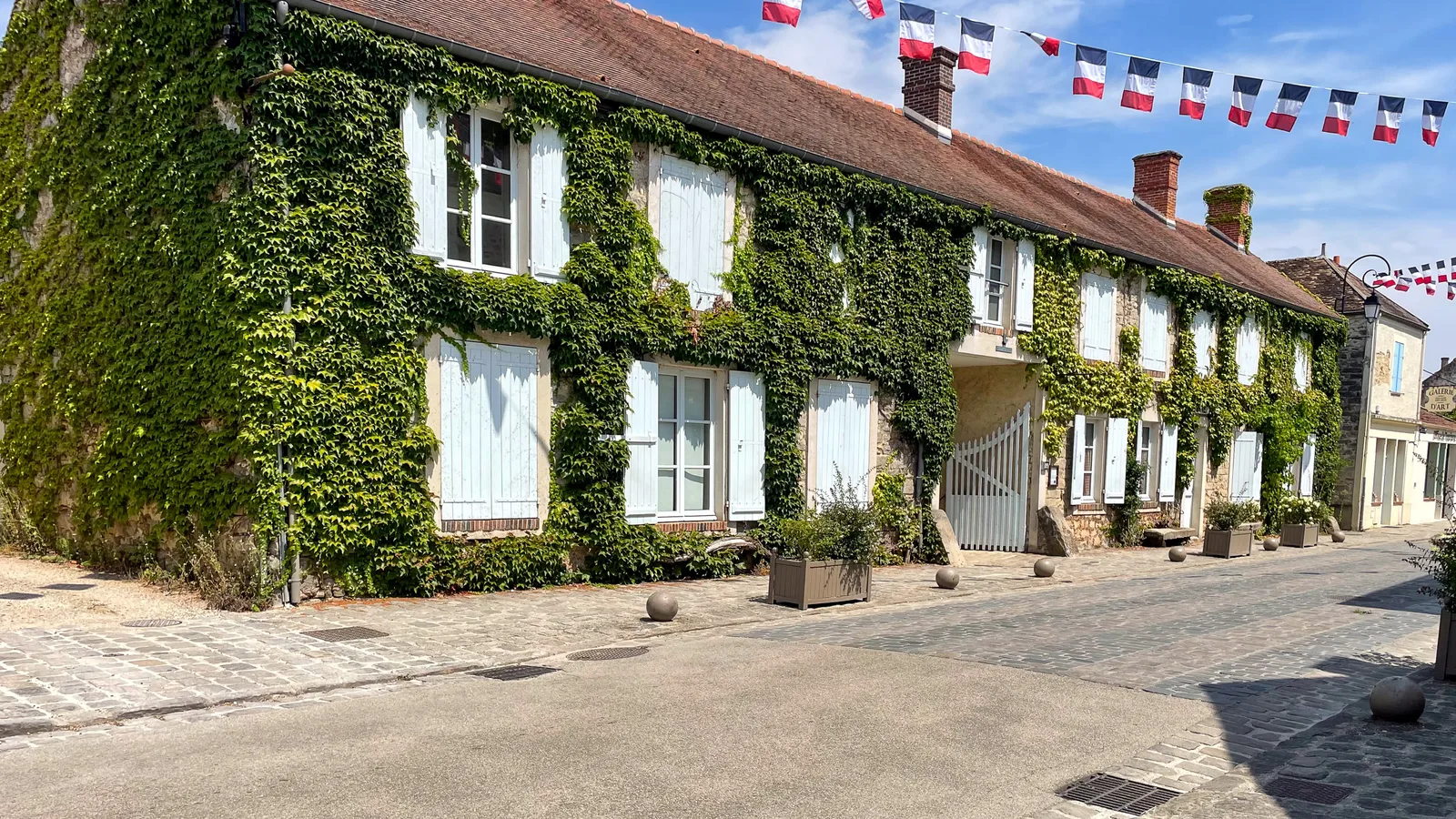
The story of the Auberge Ganne begins with a shop. François Ganne and his wife ran a grocery on the Grande Rue that served drink and food, then took in lodgers. The lodgers were painters: from the 1820s to the 1860s, some sixty French and foreign artists stayed there, together or in turn. They often had more canvases than cash; the Ganne family had spare rooms and a practical disposition. Legend has it that the painters settled their board in paintings. The reality is more modest, and better: they painted everywhere, on the furniture, on the door panels, even on the bedroom walls.
What came of it, over a few decades, was something nobody planned: walls covered in sketches and studies, a dining room where people ate together, argued about light and technique, and occasionally drew on the furniture. The inn became a kind of accidental academy: no programme and no master, but built on shared preoccupations and daily proximity, which is probably more useful.
I think about this sometimes when I'm running the gallery. The conditions that produce serious artistic work are rarely grand or official. They tend to be practical: affordable rooms, a tolerant landlord, enough time in the morning before the light shifts. Père Ganne did not found a school. He simply let painters live and work under his roof. What followed came from proximity and time, not design.
The building still stands on the Grande Rue. Bought by the commune in 1987, it has housed the Musée des Peintres de Barbizon since 1995, run by the Seine-et-Marne Département since 2004. During the restoration in the early 1990s, sketches and studies left by the artists were discovered on the upper floor, beneath old wallpaper and whitewash. As museums go, it is an unusually direct record: almost nothing that survives there was made for posterity; it all came out of daily life.
When I take people through it for the first time, that is usually what lands: not the quality of the work, which varies, but the ordinariness of these traces. A shared life recorded in drawings. It makes the history feel less like art history and more like life, which is perhaps exactly what the Barbizon painters were arguing for in their work as well.
Related essays
Places in this essay