Landscape
Paths to the Forest Edge
A short map of the routes that lead from stone streets to weathered rock, in the painters' footsteps and along the trails Denecourt marked.
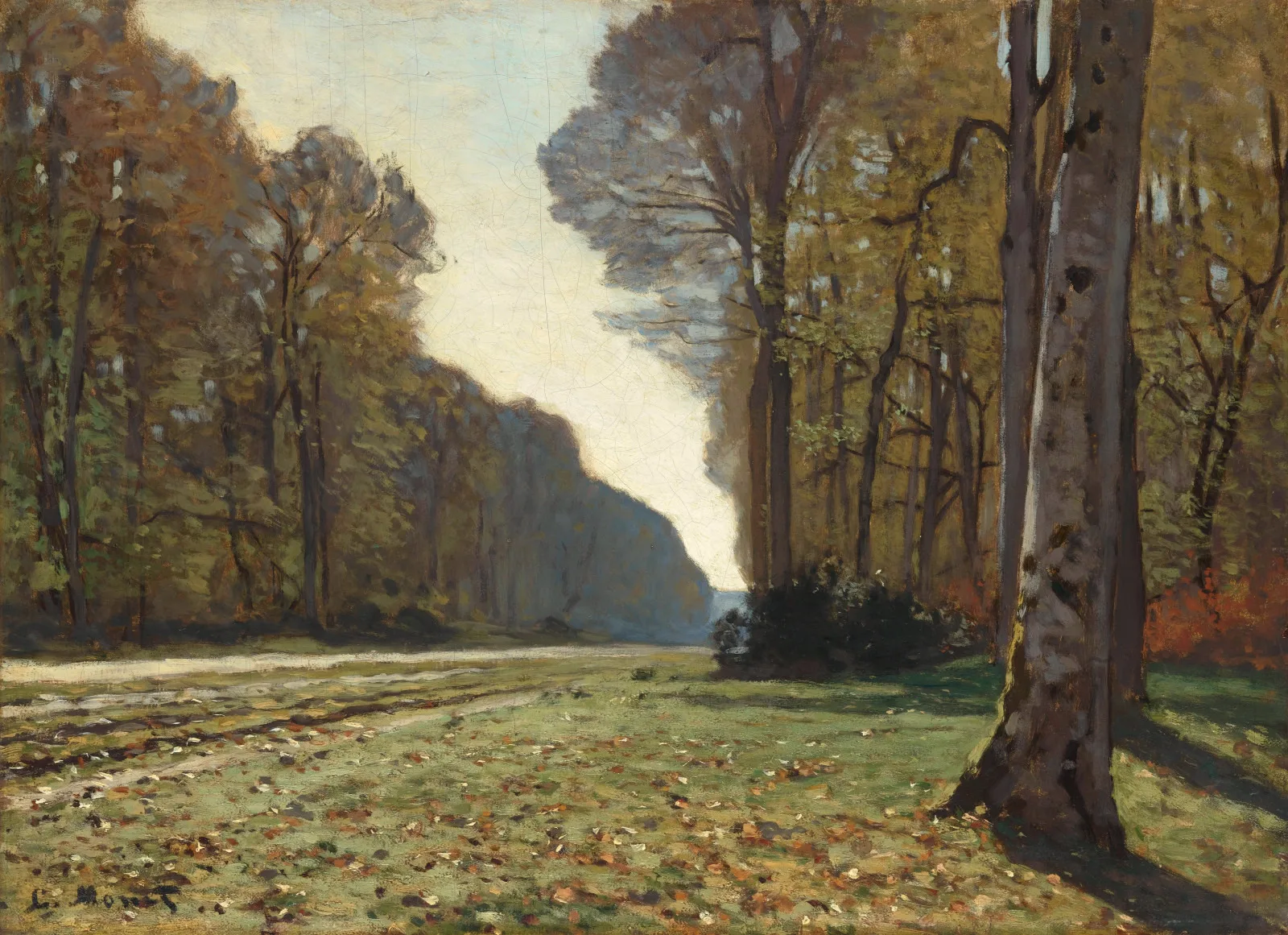
The village ends very precisely. One moment you are on a stone street, between walls and gates and the smell of a kitchen somewhere. Then the paving stops, the surface turns to sand, and you are in the forest. There is no buffer, no park, no gradual transition. Just an edge, and then the trees.
I have crossed that threshold more times than I can count, and it still does something to me. I think it is the change in acoustics as much as anything: the street sounds disappear almost immediately, replaced by something that is not silence but much quieter, the particular quiet of old trees and sandstone.
The painters who came to Barbizon crossed this edge almost every day. They carried folding easels and wooden paint boxes, the tools of plein-air painting, still relatively new, and walked into the Forest of Fontainebleau looking for specific things: a clearing with a certain quality of light, a rock formation they kept returning to, a tree that Théodore Rousseau might study for months or years.
Claude-François Denecourt, known as the Sylvain, began laying out trails through the forest in 1842. He marked them with blue arrows painted on the rocks and published guidebooks describing the routes. Part of that network still structures the forest today. What is now called the Sentier des Peintres, the Painters' Path, follows in part the ground the Barbizon painters worked, linking the village edge to the clearings and rock formations that appear in their paintings.
I walk part of it most mornings. The light at the forest entrance between seven and nine has the same clarity that drew the painters here. The rocks are the same rocks. The forest, unusually, has been protected since the mid-nineteenth century: the artistic series of 1853, made official and extended in 1861, came about partly at the painters' own request. So the place has changed less over two centuries than most landscapes do.
What I notice on those walks is that the painters were not looking for the spectacular. There are no grand vistas in this forest, no peaks or waterfalls. What held their attention was ordinary: the way lichen grows on a north-facing rock, the canopy light in October, the colour of the sandy path in the morning. Attention to the unremarkable. That is still the right way, I think, to walk here.
Related essays
Places in this essay